
Pass Me Not, O Gentle Saviour
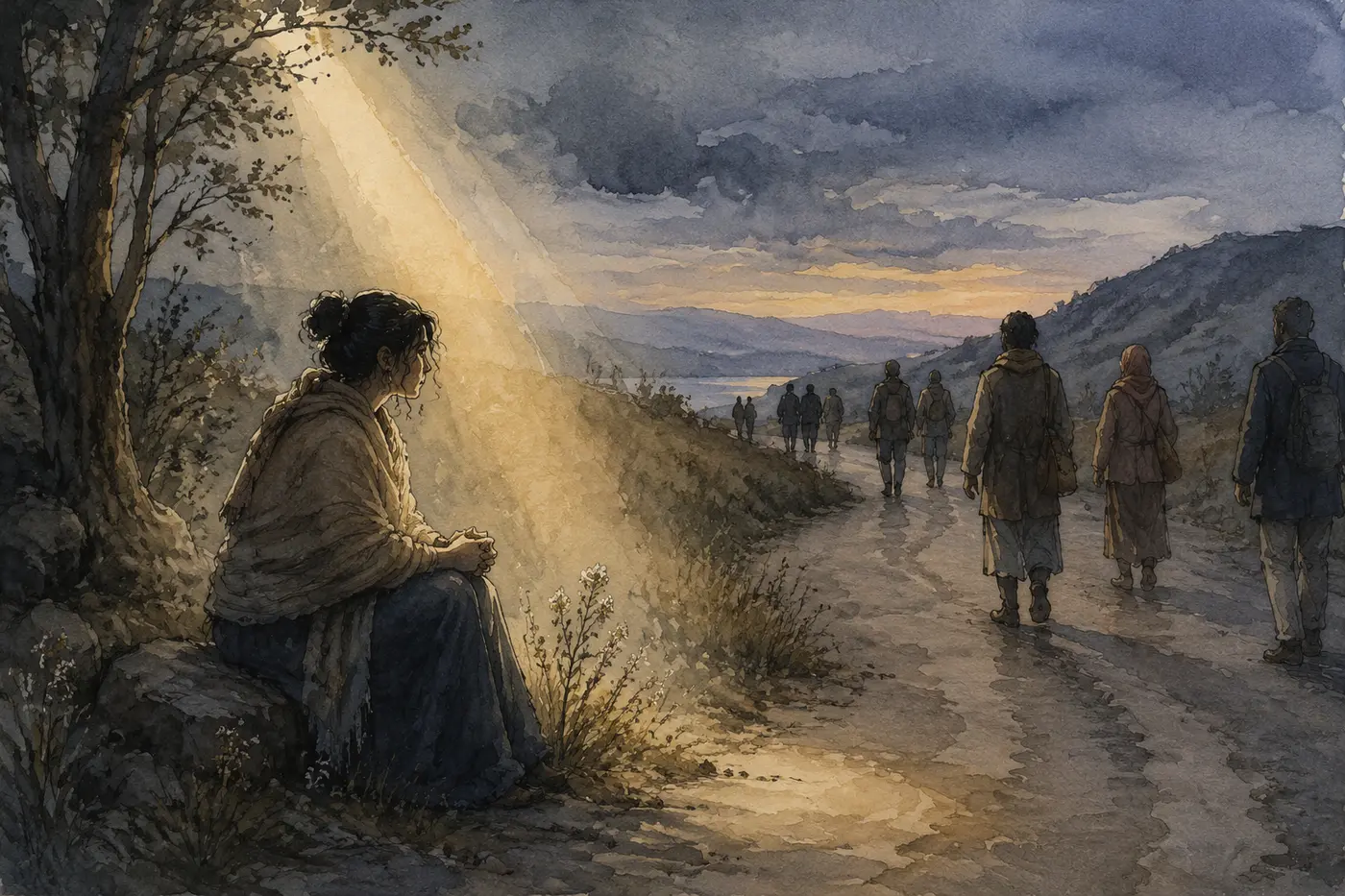
A waiting soul beside the road: vulnerability, prayer and the hope of being seen.
Scripture and Biblical Echoes
The Beauty of the Hymn
Fanny J. Crosby wrote the text in 1868, with music by William H. Doane. Its recurring appeal gives a public congregation the language of intensely personal prayer. The repeated address ‘Saviour, Saviour’ pauses the verbal movement so singers can dwell on the name before completing the plea. Each return of the refrain renews the urgency, making repetition an act of prayer rather than ornament.
My Reflection
This was the first hymn I learned to play on the piano, and that memory remains inseparable from its plea. The repeated call taught my hands persistence and taught my faith that prayer may be direct, vulnerable and shared. This hymn marks an important milestone in my musical journey as the first hymn I learned to play on the piano. Its refrain has remained more than a musical exercise: it is an urgent prayer for moments when confidence fails and human strength feels insufficient. Although the words are in the first person, congregational singing prevents the plea from becoming isolated. Many voices admit need together; stronger singers carry those whose own voice or faith may feel weak. Each return of the refrain allows unfamiliar singers to join, while the repeated “Saviour” can gather feeling without requiring elaborate musical display.
Your Reflection
What memory, place or season of faith does this hymn bring back to you?
Share your hymn storyFurther personal recollections
“Pass Me Not, O Gentle Saviour” has long seemed to me one of the most emotionally powerful hymns available to a preacher, singer or accompanist. Its plea is simple enough to be understood immediately, yet profound enough to accompany a lifetime of faith.
We all reach moments when we fear we have fallen too far—when disappointment, transgression or failure seems to place redemption beyond reach. At precisely those moments the hymn becomes most necessary. Its prayer is not polished self-justification. It is the appeal of someone who has little left to offer but a request: Remember me, Lord.
I hear an echo of the thief on the cross, who appealed to Jesus from the very edge of his life. The force of that story is the assurance that no one is automatically beyond Christ's regard. Even when we find that assurance difficult to believe, the reality of divine mercy is not diminished by our doubts.
I also associate this hymn with the piano and with the expressive possibilities of accompaniment. Its repeated appeal can be sung gently, urgently or with gathering confidence. In an altar call, a thoughtful singer or accompanist can make space for reflection without forcing emotion. That is one reason it has served so often in moments of invitation.
Ultimately, the hymn is not a song about being overlooked. It is a song about the Saviour who notices every last one. The plea opens the heart; the assurance gives it somewhere to rest.
What I Carry
The prayer to be remembered rests on the assurance that Christ overlooks no one.